
"Self-reliance isn't just a trend; it's the ultimate insurance policy. Whether you have 40 acres or a 4th-floor balcony, true autonomy starts with these five shifts."
To start homesteading in 2026, focus on five foundational pillars: intensive small-space gardening, food preservation (canning and fermenting), basic traditional medicine, renewable energy basics, and defensive property security. Modern homesteading is no longer defined by acreage, but by the level of self-reliance you achieve within your current environment.
Why Self-Sufficiency is the Ultimate Form of Self-Defense
For the readers of Queen Bee Survival, homesteading isn't just about growing tomatoes; it’s about eliminating dependencies. When you control your food, water, and power, you are no longer a victim of supply chain failures or rising costs. This is the "soft" side of self-defense—protecting your family’s future by being prepared.
1. Master the "High-Yield" Garden
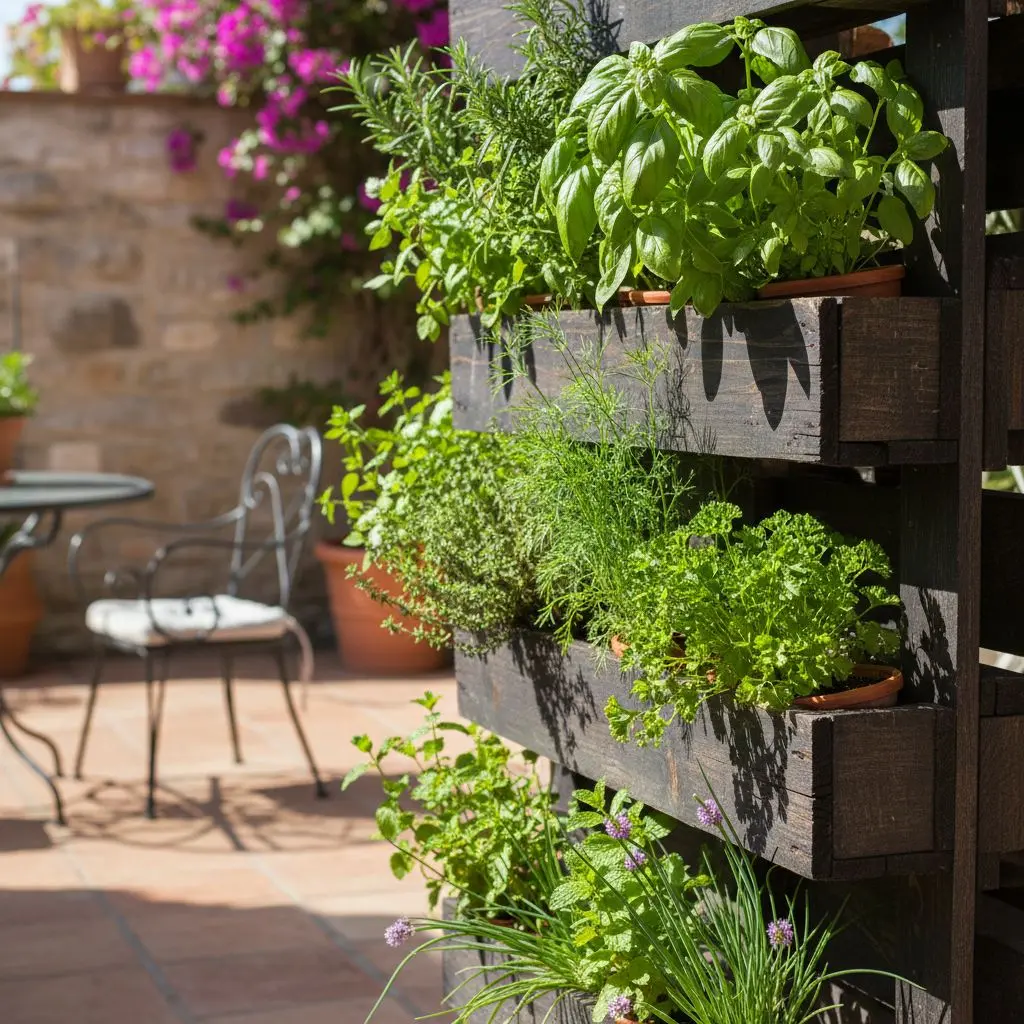
In 2026, we don’t just plant; we optimize. If you have a backyard or even a balcony, focus on Vertical Gardening and Heirloom Seeds.
- The Skill: Learn to save your seeds. Buying seeds every year is a dependency.
- The 2026 Trend: "Rewilding" small patches of your yard to attract pollinators that increase your vegetable yields naturally.
High-Yield Urban Gardening
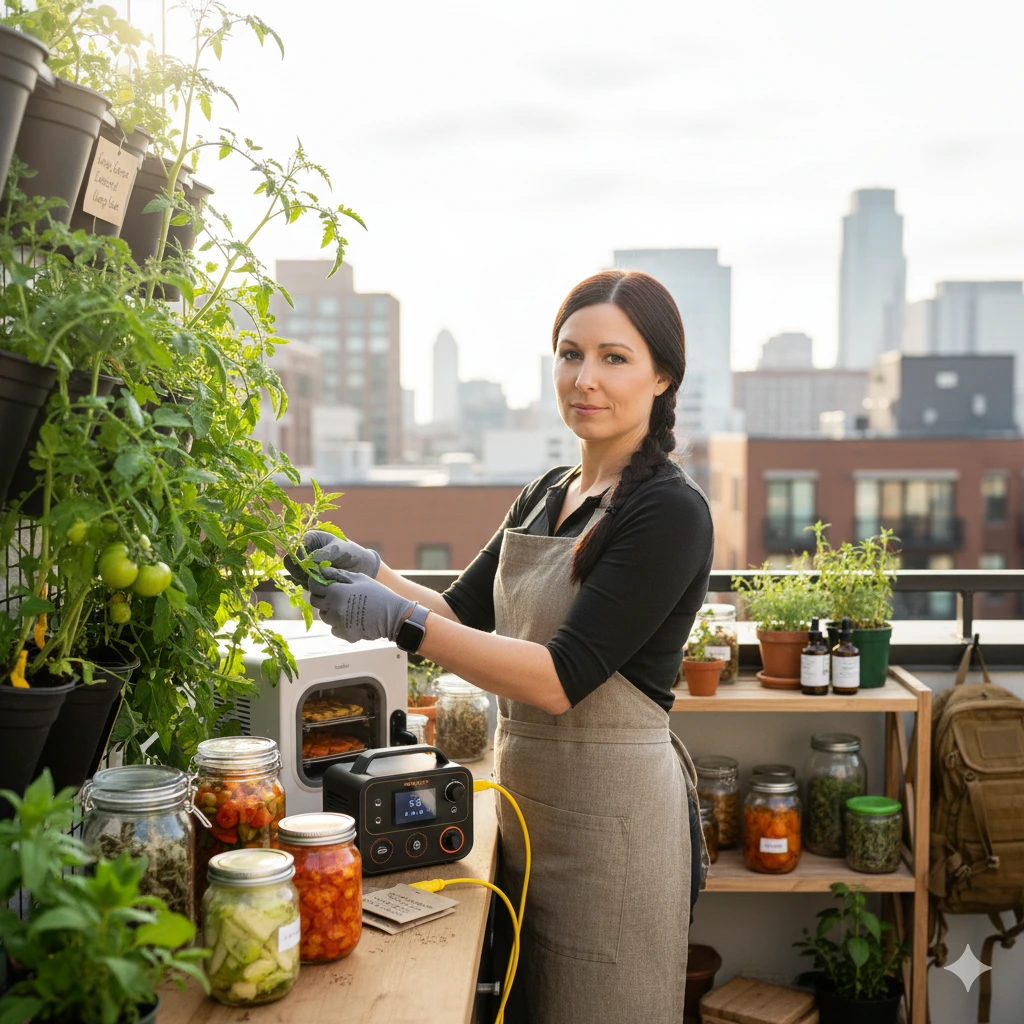
Most people associate homesteading with rolling hills and vast acreage, but in 2026, the most resilient gardens are often found on balconies and windowsills. High-yield urban gardening is about maximizing every square inch of your environment to produce nutrient-dense food.
By shifting your focus from "rows of crops" to vertical systems and intensive container gardening, you can produce a significant portion of your daily greens and herbs regardless of your zip code.
The Vertical Victory ProtocolTo get the highest calorie return for the lowest space investment, use this tiered approach:
Step 1 - Identify Your Light.
Track your sun exposure for 48 hours. Most edible greens need at least 6 hours of direct light.
Step 2 - Go Vertical
Use wall-mounted planters or "tower" systems rather than traditional pots. This triples your growing surface area.
Step 3 - Cut-and-Come-Again.
Focus on "perpetual" crops like kale, Swiss chard, and loose-leaf lettuce. Instead of harvesting the whole plant, take only the outer leaves so the plant continues to produce for months.
2. Modern Food Preservation (Beyond the Mason Jar)
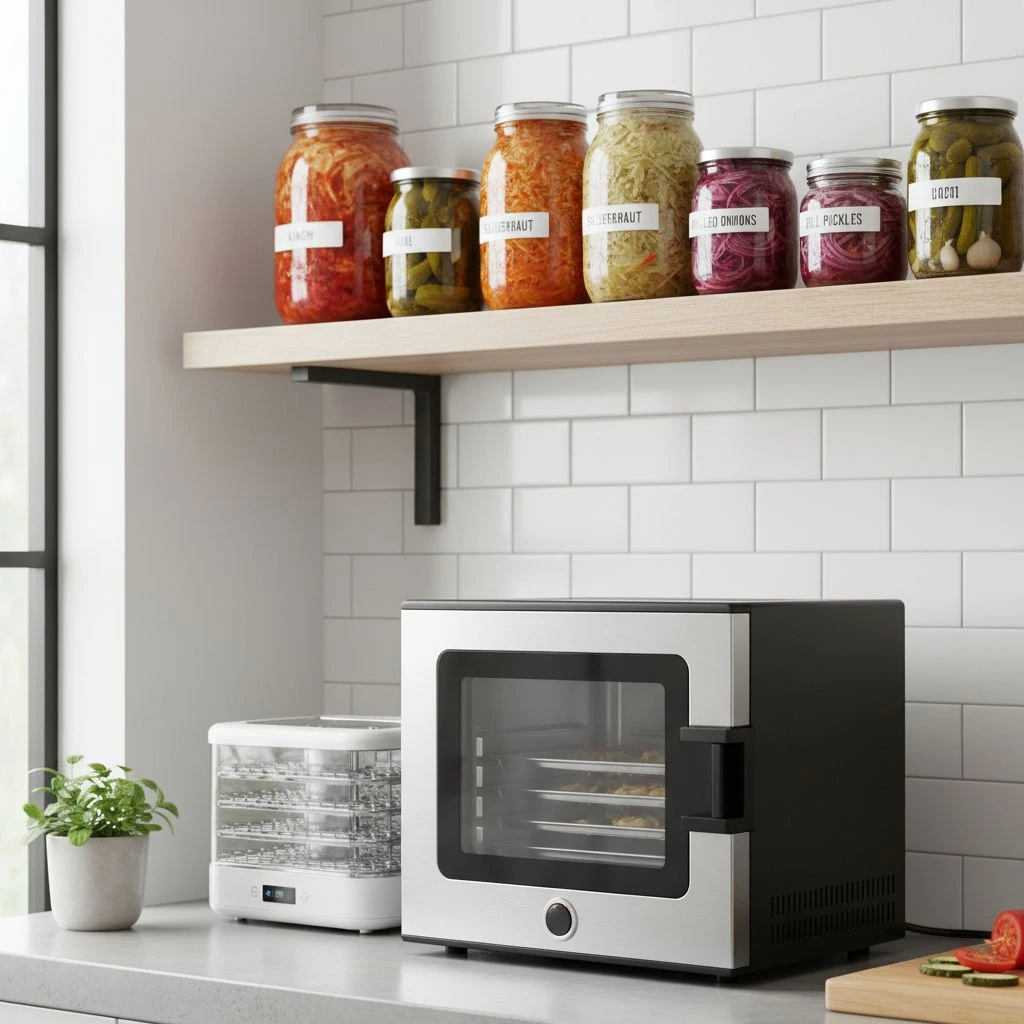
Canning is a classic, but in 2026, Freeze-Drying and Fermentation are the gold standards.
Fermentation: This is a "living" preservation method that boosts gut health—another layer of survival.
Inventory Tip: Keep a "Rolling Pantry." Use what you store and replace it immediately. Never let your stock get dusty.
Harvesting food is only half the battle; the real mastery lies in keeping that harvest shelf-stable without relying on a freezer. In a world of rising grocery costs and potential supply chain "hiccups," a well-stocked pantry is better than money in the bank.
Modern food preservation isn’t just about old-fashioned canning; it’s about using fermentation, dehydration, and proper dry storage to create a food buffer that lasts for months, not days.
The Small-Batch Fermentation Drill Fermentation is the safest and easiest way for a modern urban homesteader to preserve nutrients without specialized equipment.
Step 1 - The Brine.
Mix 1 tablespoon of sea salt with 2 cups of filtered water.
Step 2 - Pack the Jar.
Slice dense vegetables (like cabbage, carrots, or radishes) and pack them tightly into a clean glass jar, leaving one inch of space at the top.
Step 3 - Submerge.
Pour the brine over the vegetables until they are completely covered. Use a small weight (or a smaller jar lid) to keep them under the liquid to prevent mold.
Step 4 - The Ferment.
Set the jar on your counter for 3–7 days. Once it tastes "tangy," move it to your refrigerator. It will now stay fresh and probiotic-rich for up to 6 months.
3. The Home Apothecary: Healing as a Skill
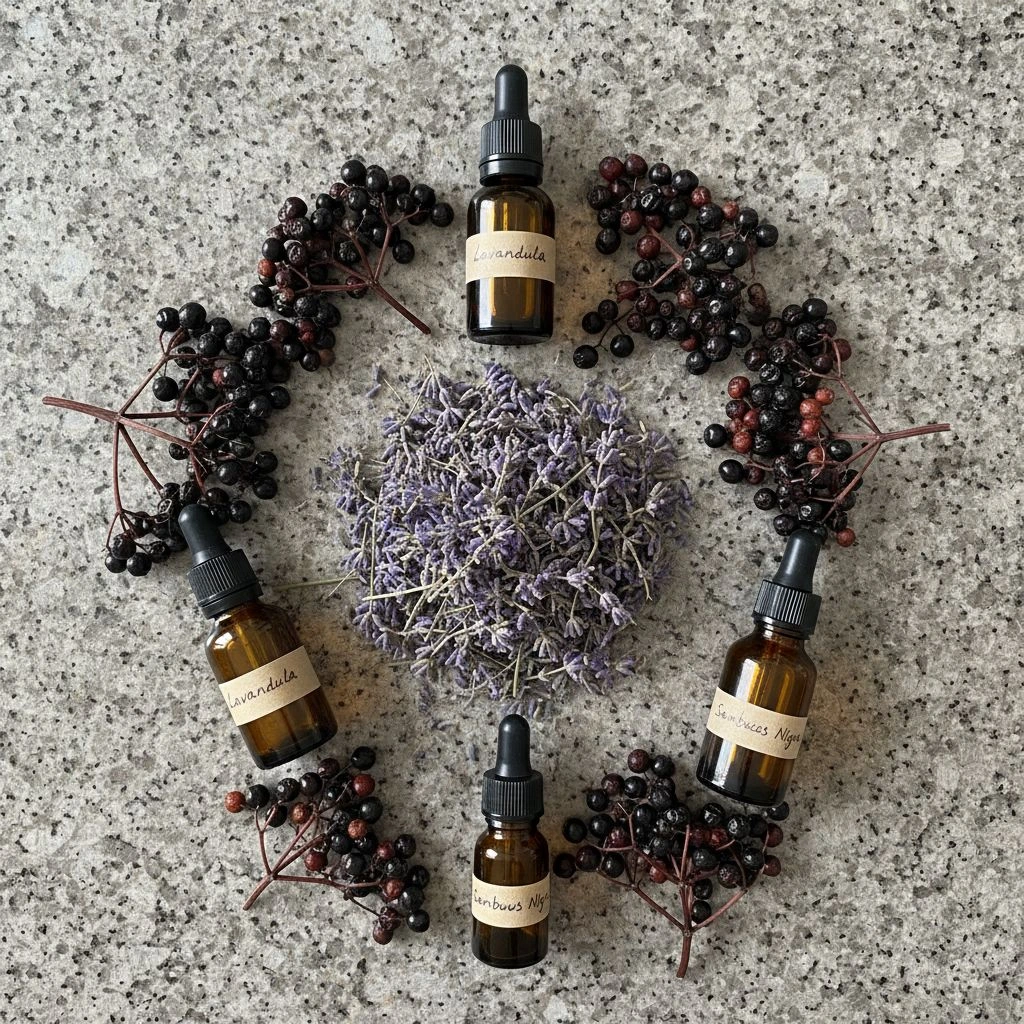
If the pharmacy is closed, do you have an alternative? Every woman should know how to grow and use:
Elderberry: For immune support.
Calendula: For skin healing and infections.
Lemon Balm: For nervous system regulation and sleep.
Note: Always consult with a professional before starting herbal regimens.
Essential Skill #3: Water Autonomy
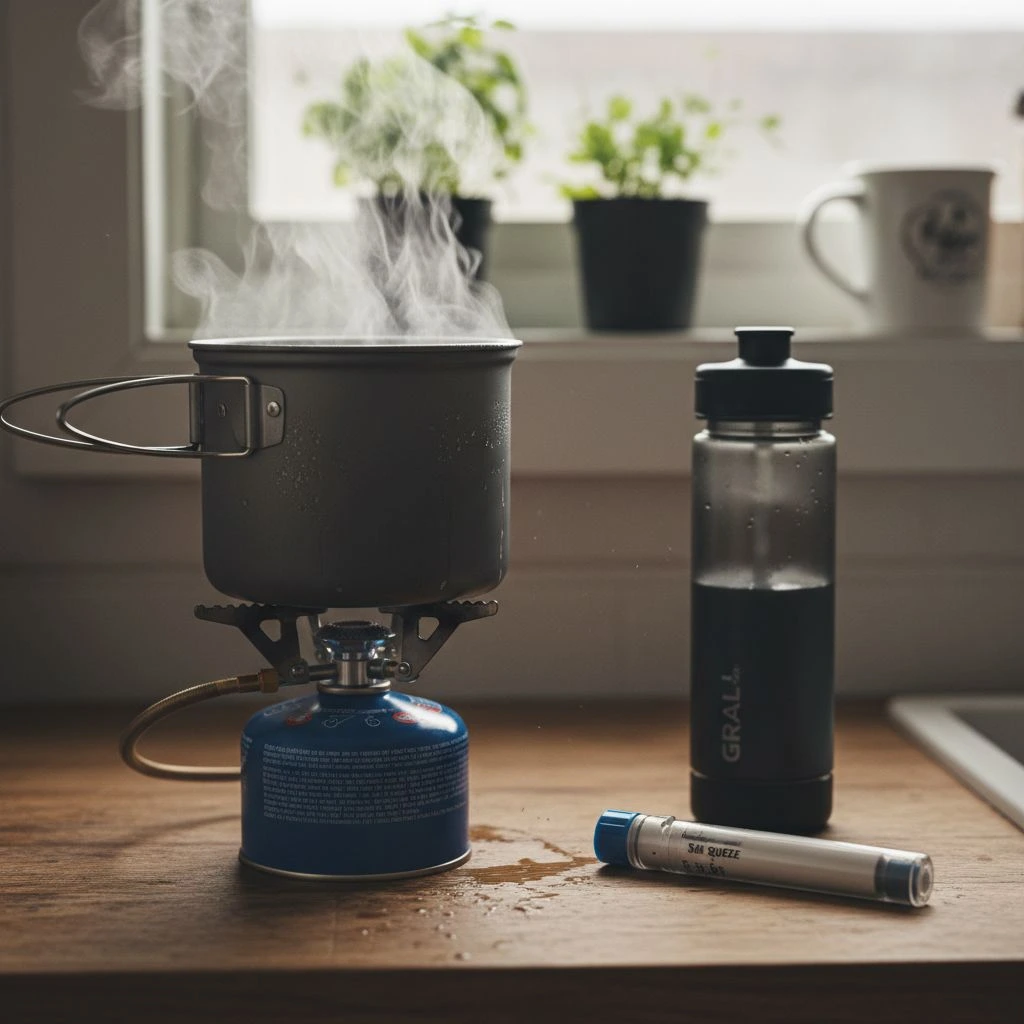
The Queen Bee Drill: The 'Filter & Boil' Protocol
In a 2026 urban crisis, the tap is the first thing you lose. Use this 2-step method to ensure your water is safe for you to use.
In the hierarchy of human survival, the 'Rule of Threes' is absolute: you can survive three weeks without food, but only three days without water. While most modern homesteading advice starts with seeds and soil, true autonomy begins with your water supply. In an urban environment, water is often our greatest hidden vulnerability.
Establishing water autonomy means transforming yourself from a dependent consumer into a self-contained system, ensuring that your household remains hydrated and healthy regardless of municipal grid stability or local infrastructure failures. Storing Alkaline Ionizer Hydrogen Water Sticks is also a great solution to have at home, for healthy drinking water.
Step 1 - Physical Filtration
Run your collected water (rainwater or stored water) through a 0.1-micron filter (like a Sawyer Squeeze) or, in a pinch, a clean cotton cloth.
Why: This removes sediment, microplastics, and protozoa like Giardia.
Step 2 - Thermal Sterilization
Bring the filtered water to a rolling boil for at least 60 seconds (3 minutes if you are at high altitude).
Why: While filtration kills bacteria, boiling is the only way to ensure 100% neutralization of viruses.
4. Energy Autonomy (The Micro-Grid)
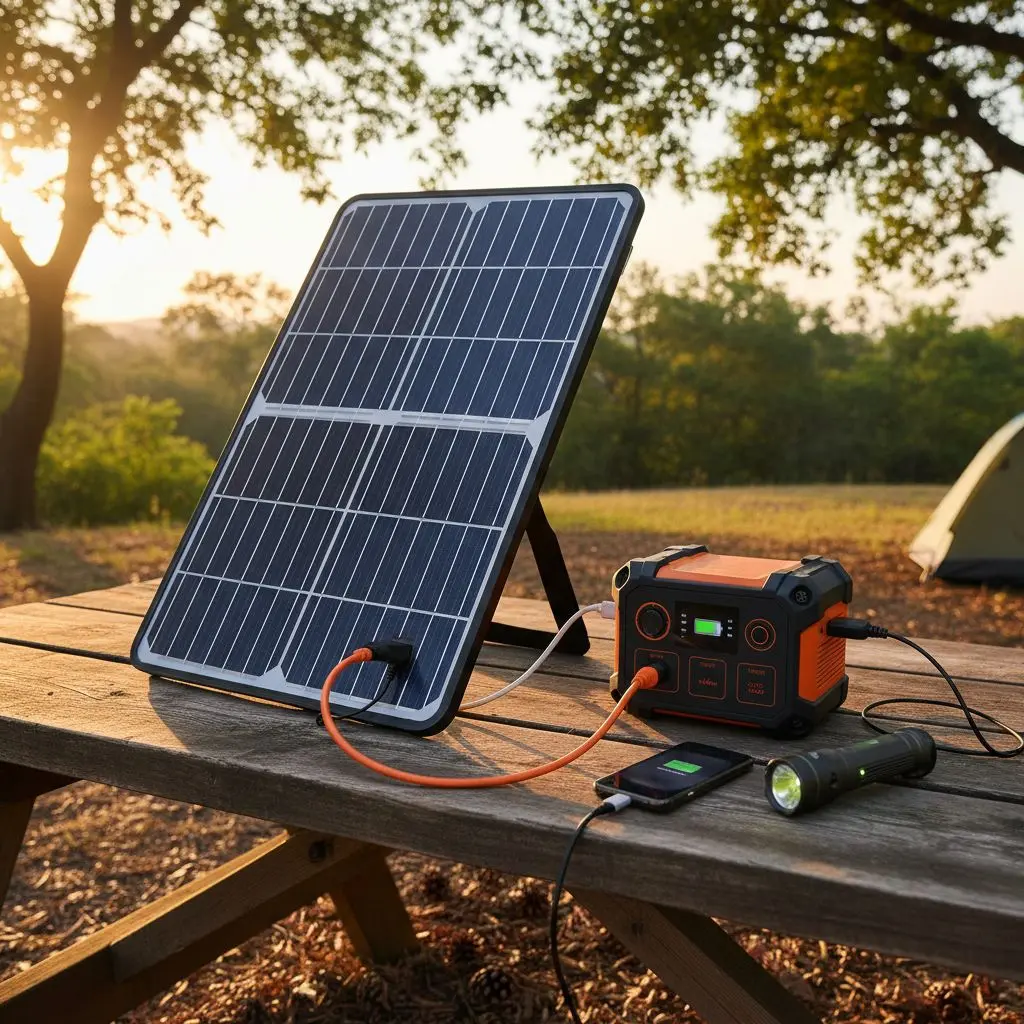
You don’t need a massive solar farm. Portable power stations (like EcoFlow or Jackery) paired with foldable solar panels allow you to keep your communications and medical devices running during a blackout.
Action Step: Practice a "Grid-Down Weekend" once a quarter to find the gaps in your system.
Energy Resilience
Energy is the "silent" pillar of homesteading. Most people don't realize how much they rely on the grid until the lights go out. Energy resilience in 2026 isn't necessarily about going completely "off-grid" with a massive solar farm; it’s about having a modular, portable system that can keep your communication devices, medical equipment, and basic lighting running during a blackout. It’s about ensuring that your home remains a functional command center even when the neighborhood goes dark.
The "Blackout-Ready" Power Audit Follow this protocol to ensure your essential electronics never lose power:
calculate your essential wattage" to a Wattage Estimation Guide from Energy.gov.
Step 1 - Calculate Your Wattage.
List your "Tier 1" essentials (Phone, Laptop, Wi-Fi Router, rechargeable flashlight). Check the back of the chargers for the "Watts" required.
Step 2 - Size Your Battery.
Invest in a portable "Solar Generator" (Lithium Power Station) that offers at least double your daily wattage needs.
Step 3 - Solar Positioning.
Practice deploying foldable solar panels from your sunniest window or balcony. Mark the "Peak Sun" hours (usually 11 AM – 3 PM) so you know exactly when to recharge your station most efficiently.
5. Situational Awareness for the Homestead
A self-sufficient home is a valuable asset, which makes it a target. Integrate your homesteading with your self-defense training:
Natural Fencing: Use thorny bushes like Bougainvillea or Blackberry as "defensive landscaping" under windows.
Secure Storage: Ensure your food and water stores are out of sight from the street.
The Home Apothecary & First Aid
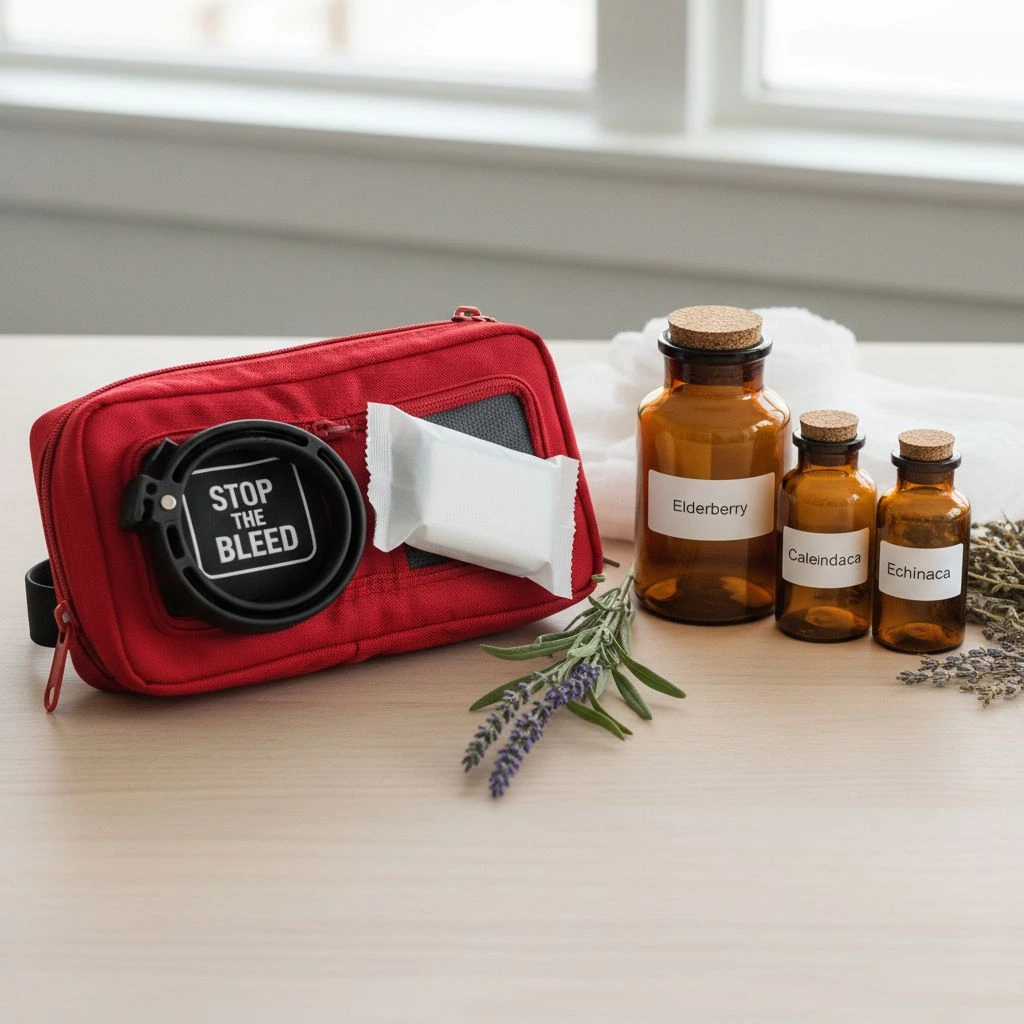
The final skill of a self-sufficient home is the ability to manage basic health and wellness independently. A home apothecary combines the precision of modern trauma kits with the wisdom of traditional herbal remedies.
By learning to treat minor ailments and injuries at home, you reduce your dependence on overtaxed medical systems and gain the confidence to handle emergencies with a calm, capable hand.
Mastering herbal remedies is only one half of the equation; for the clinical side of care, this pairs perfectly with our deep dive into The Survival Medicine Handbook, which covers how to handle medical emergencies when help isn't coming.
The 2-Layer Medical ProtocolEvery modern home should maintain a split-system medical kit:
Step 1 - The Trauma Kit.
Keep a "Stop the Bleed" kit containing a high-quality tourniquet, hemostatic gauze, and pressure bandages. Know exactly where this is and how to use it in seconds.
Step 2 - The Apothecary.
Store a 6-month supply of "The Big Three" herbal basics: Elderberry (for immune support), Ginger (for digestive health), and Calendula (for topical skin healing). Store these in dark glass jars away from direct sunlight to maintain potency.
Resilience isn't built in a day, but it is built one skill at a time. Which one are you starting today?
Frequently Asked Questions: Modern Homesteading & Self-Sufficiency
A: Absolutely. Apartment homesteading focuses on "micro-efficiency." You can master indoor vertical gardening (using hydroponics or LED grow lights), fermenting your own probiotic foods (like kombucha or sauerkraut), and building a "go-bag" for urban emergencies. Self-sufficiency is a mindset of reducing reliance on external systems, regardless of your square footage.
A: It doesn't have to be. The most expensive part of homesteading is often the "gear," but the most valuable part is the knowledge. You can start for free by learning to save seeds from grocery store produce, practicing "dry fire" drills for home defense at no cost, and studying local edible plants. Focus on skills first, then invest in tools like solar generators or freeze-dryers.
A: Effective security uses "Layered Defense." Start with physical barriers like motion-activated lighting and defensive landscaping (thorny plants under windows). The second layer is technology, such as off-grid camera systems. The final, and most important, layer is community. Knowing your neighbors and having a mutual aid plan is often more effective than any fence.
A: The most critical skills are situational awareness, basic first aid/trauma care, and water purification. While gardening is important for long-term sustainability, knowing how to identify a threat before it escalates and how to ensure you have drinkable water are the immediate priorities for any survival situation.
A: Homesteading improves safety by creating a "buffer" between you and a crisis. When you have a month's worth of food, a way to cook without electricity, and a secure home perimeter, you aren't forced to go out into potentially dangerous or chaotic environments during a local or national emergency. It gives you the "power of staying put."
Conclusion: Start Where You Are
You don't need 40 acres and a mule to be a homesteader. You need a 2026 mindset. Start by mastering one skill this month—whether it's baking your first loaf of sourdough or installing a rain barrel.
What is the one skill you’re most intimidated by? Comment below and let’s tackle it together!